Emergency Management
Stop talking about incidents. Start rehearsing them.
Foresight is the AI-powered crisis simulation platform that extends beyond traditional tabletop and field exercises — creating an immersive environment driven by the need for real-time decision making.
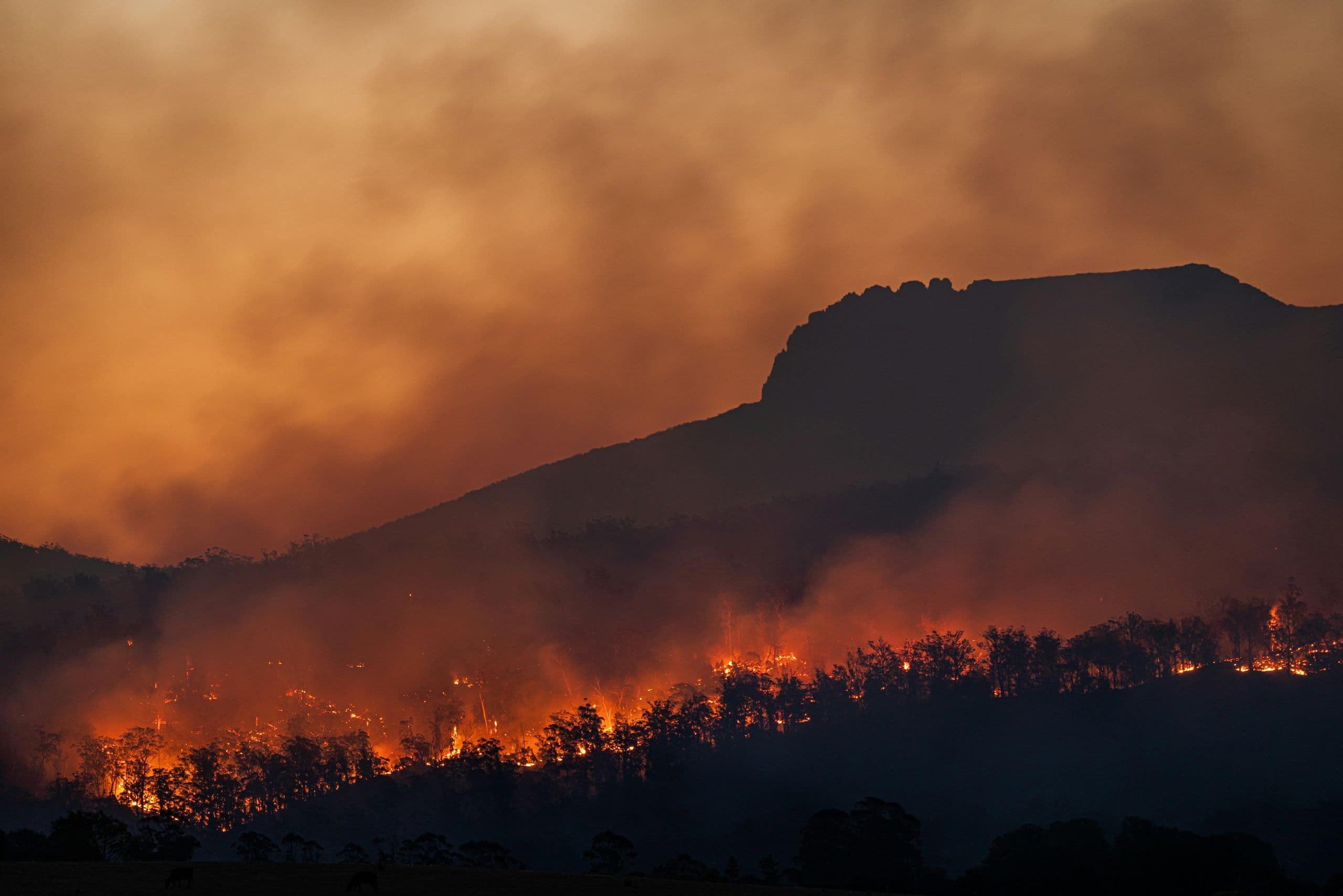
Incidents have changed. Most exercises haven’t.
Fire seasons are longer. Incidents are more complex. The expectation that agencies coordinate seamlessly under pressure is no longer an aspiration — it’s a requirement. The training and exercising programs most agencies rely on were not designed for the environment our emergency management leaders are now operating in.
Foresight is the crisis simulation platform that closes the gap.
Five things are making this urgent
Incidents are outgrowing training.
Fire seasons are twice as long as they were in the 1970s.
Coordination gaps surface too late.
Major incidents involve fire, police, health, SES, and local government. Most exercises struggle to replicate the demands of multi-agency response.
Experience is leaving faster than it can be replaced.
The next generation of leaders needs to build capability faster than the traditional career model allows.
The data environment has overtaken the training.
Modern IMTs integrate weather, fire prediction, aerial intelligence, resource tracking, field observations, and live media. A tabletop does not.
Traditional exercises cost too much to run often enough.
Budgets are tighter. Every exercise needs to deliver more than it costs.
These aren’t new problems. They’re documented, well understood, and becoming critical. The technology to solve them now exists.
Put your team inside this
It’s 11:45.
A grassfire in your jurisdiction has broken containment and is pushing into forested public land near communities under strong winds. Sixty trail runners are on a course, smoke is drifting into town, and your Incident Management Team is already juggling requests for warnings, aircraft, road closures, and political briefings.
By 13:00, firefighters are injured in a burnover. Several runners remain unaccounted for. Residents are gathering at the sports ground while others are driving toward the fire. The media is live before your SitRep is complete.
What does your IMT do?
In a Foresight exercise, they find out. Your IMT operates under real-time pressure, in your geography, with Operations, Planning, Intelligence, Public Information, Police, Local Government and command roles all working simultaneously. Injects arrive by phone, radio, email, social media, and live media coverage. The fire spreads, the weather shifts, and the political stakes rise. There is no pause button. You only have choices, consequences, and the next problem arriving.
“This is the closest I've seen to the pressure and tempo of a real IMT room without smoke in the air. The competing priorities, information gaps, and constant interruptions felt authentic. It exposes decision-making issues in the first hour that traditional exercises often miss.”
Tony English
Veteran Firefighter & Emergency Management Leader
What Foresight delivers
Six outcomes that matter to emergency management leaders — built into every exercise.
Pre-season readiness
A full IMT exercise calibrated to your specific fire weather, fuel conditions, doctrine and geography. Start prepared.
Multi-agency unity
Fire, police, health, SES, and local government in one exercise. Surface coordination gaps before a real incident does.
Incident Controller confidence
Fast-track capability. New Incident Controllers make the high-stakes calls. Hindsight tracks their development across a structured scenario series.
Media training
Simulate ministerial and media pressure at critical decision points. Your leaders handle it safely, repeatedly, with performance data on how they went.
Prolonged incident management
The shift handover is the most dangerous moment in a campaign fire. Foresight stress-tests handover quality, IAP continuity, and command decision-making across compressed multi-day operations.
Whole-of-government response
Test coordination beyond emergency services. Whole-of-government coordination tested before the next major disaster demands it.
The Platform
Crisis simulation built for the way incident management actually works.
Foresight puts your team inside the incident, not around a table talking about it. Every participant operates in their actual AIIMS role. The scenario evolves based on decisions. Coordination gaps surface in the exercise, not the response.
AIIMS role engine
Every participant inside their actual function. The IC sees everything. The PIO sees the media crisis building. Roles feel real because they are.
Live Incident Action Plan
Planning drafts it. The IC approves it. It gets distributed. Under time pressure, every operational period.
Incident escalation engine
EXCON triggers escalation. Watch how your team handles span of control, delegation, and command structure as complexity grows.
Common operating picture
A live spatial layer with dynamic mapping in your actual geography. Different roles see different data. The gap between what the IC believes and what Operations knows becomes visible — and fixable.
Media & community pressure
Simulated press conferences. Ministerial calls. Live social media feeds. Realistic pressure, practiced where it's safe to get it wrong.
Hindsight
Post-exercise reporting mapped to AIIMS competency standards. Decision timelines. Coordination gaps. Doctrine alignment. A capability benchmark your agency can track.
What AI makes possible
AI builds the environment. Humans run the incident. Here’s what changes.
| Feature | Before Foresight | With Foresight |
|---|---|---|
| Set-up time | Weeks of specialist, manual design per exercise | Exercises built in hours |
| Facilitation | Large, expensive EXCON team | A single facilitator runs the full exercise |
| Roleplaying | Limited by available humans | AI agents generate real stakeholder complexity through radio traffic, phone calls, emails, and social feeds |
| Frequency | Once or twice a year | Weekly and monthly exercises become operationally realistic |
| After action review | Subjective debrief based on what the facilitator noticed | Objective, data-driven Hindsight |
The Foresight Commitment
AI builds the environment. Humans run the incident.
Foresight removes the ceiling on what’s possible in an exercise — more fidelity, more frequency, more agencies in the room. Experienced practitioners remain in control of every design decision, every escalation call, and every debrief. The AI builds the world. Your people decide what happens in it.
Governance & safety
Every inject and escalation decision is reviewed and approved by your exercise controller before it enters the simulation.
Doctrine alignment
Foresight supports AIIMS, ICS/NIMS, JESIP, and CIMS — configured to your jurisdiction's doctrine, not a generic framework.
Security
The platform can be hosted on sovereign cloud infrastructure. No operational data is required to run an exercise.
Audit-ready governance
In an era of Royal Commissions and Coronial Inquests, "we did our best" is no longer enough. Hindsight provides audit-ready reporting that proves your agency is proactively identifying and fixing systemic gaps.
One framework. Global standards.
Whether you operate under AIIMS (Australia), ICS/NIMS (USA), JESIP (UK), or CIMS (NZ), Hindsight maps performance to the specific competency standards of your jurisdiction.
The next major incident will find every gap in your team's readiness.
Foresight finds them first.
The next incident won't wait for you to be ready.